Earlier this year, I asked agents, artist representatives, and others how they found illustrators. Please note that this was an informal survey conducted across my social platforms, and not meant to represent all agents, art reps, and those who hire illustrators. Thanks to those who participated.
Also see Part 1 of these survey results: How Freelance Illustrators Find Work. I created these polls mainly to gather information to use in my Marketing Boot Camp For Busy Illustrators at the SCBWI Winter Conference in NYC. Although some agents and art reps gave me permission to include their names here in this public survey summary, please note this does NOT mean these individuals are open to queries.
18 agents/art reps replied to my survey.
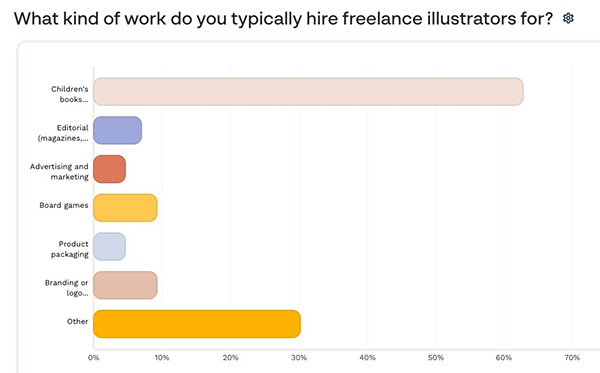
43 people who hire illustrators (editors, art directors, authors, others) replied to my survey.
If you’re the type who finds it easier to browse visuals than text, you can skip over the takeaways to the graph results.
Main Takeaways from agents and art representatives’ poll:
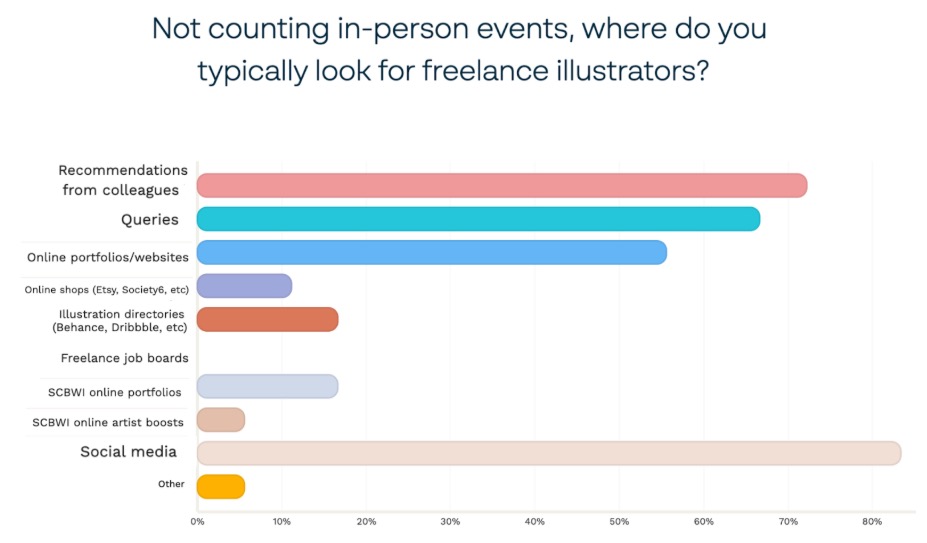
Networking is a major factor. Not only do nearly three-quarters of agents and art reps surveyed rely on recommendations from colleagues, but they also use social media. (Note: again, keep in mind that I posted my survey ON social media.)
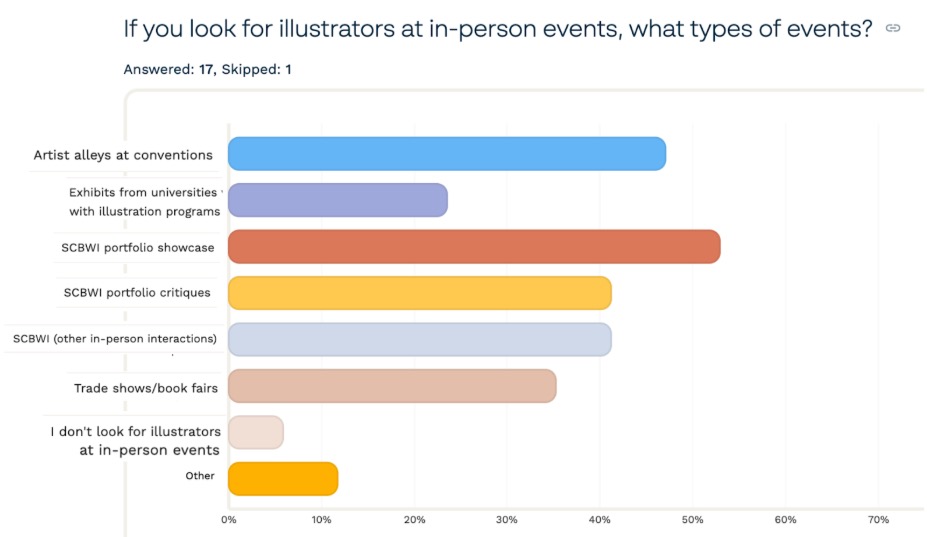
Agents and art reps who look for illustrators at in-person events listed the SCBWI portfolio showcase, followed closely by artist alleys at conventions, then SCBWI portfolio critiques and other face-to-face SCBWI events, then trade shows and book fairs, and exhibits from universities with illustration programs.
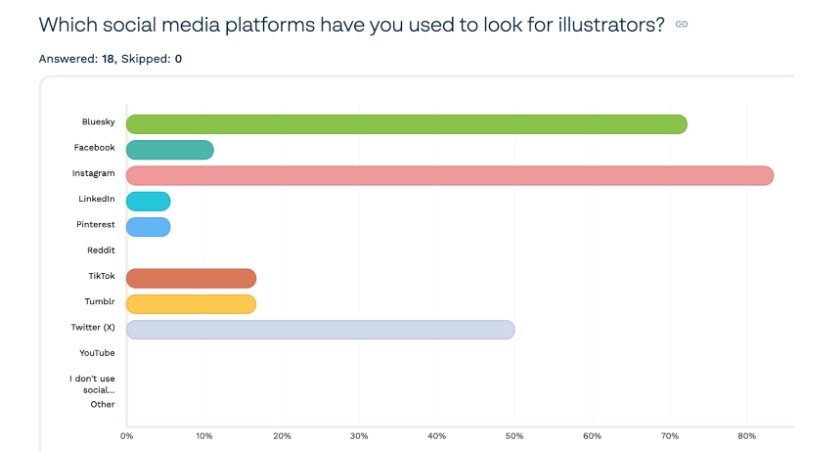
When asked which social media platforms art reps and agents have used to look for illustrators, Instagram was the most popular, followed by Bluesky. Twitter was the third-most source, but many said they no longer use Twitter or that Twitter is no longer a good place to find illustrators.
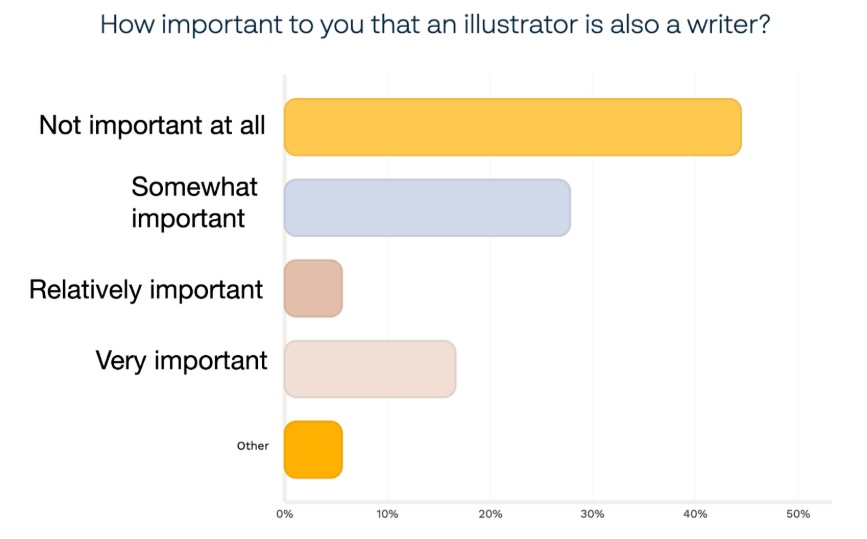
Nearly half of respondents said that it’s not really important that an illustrator is also a writer.
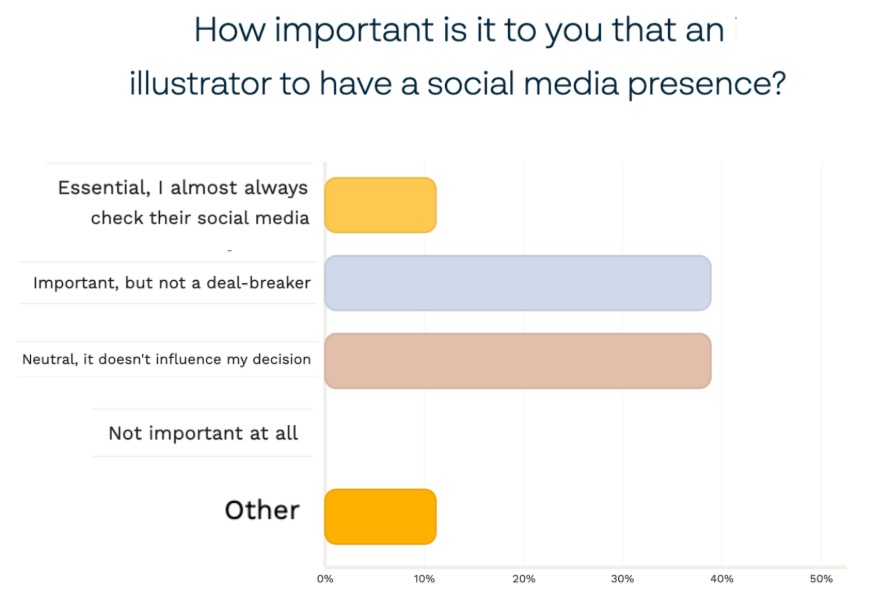
When asked how important it is for an illustrator to have a social media presence, most said it was not a deal-breaker (thought important) or that it didn’t really influence their decision about whether to take someone as a client. Approximately 12% said it was essential and that they always check their social media.
Main Takeaways from those who hire illustrators:
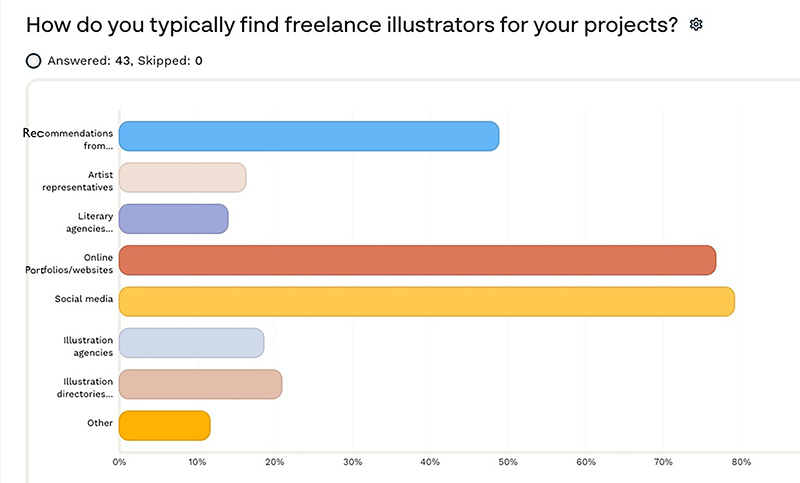
Nearly 80% of those who hire illustrators relied mainly on social media and online portfolios/websites (but again, keep in mind my survey was conducted on social media). Approximately 50% rely on recommendations from colleagues.
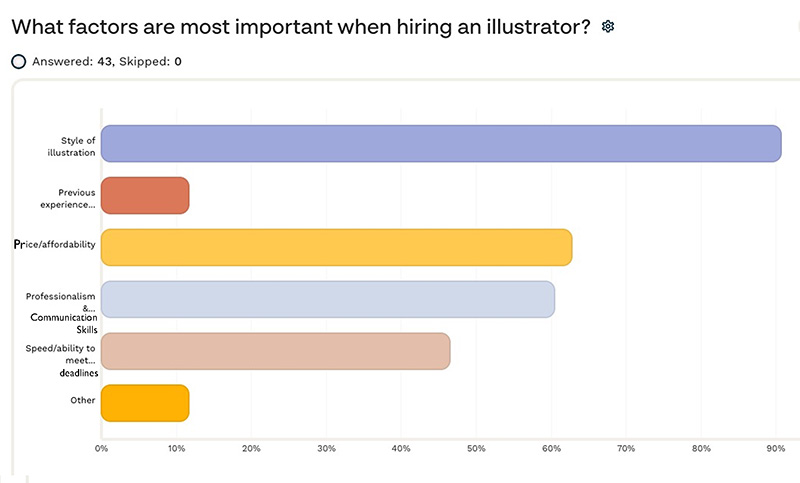
90% said the style of illustration was the most important factor when hiring an illustrator. Other significant factors include price/affordability, professionalism and communication skills, and speed/ability to meet deadlines.
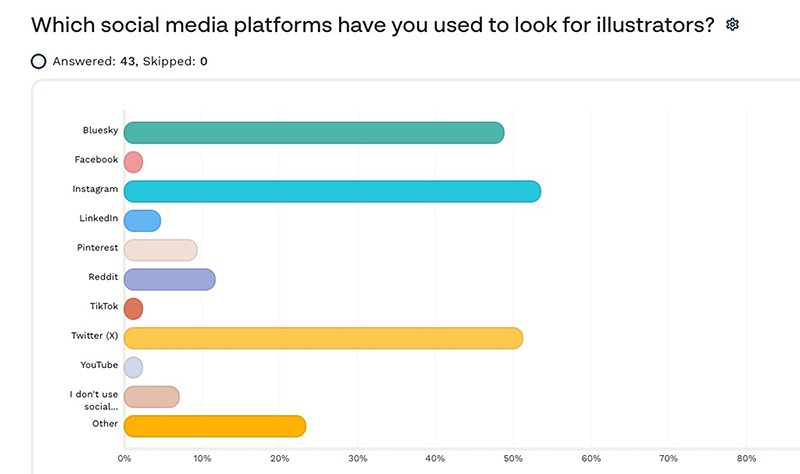
When asked which social media platforms they use to look for illustrators, Instagram was the most popular platform, followed closely by Twitter and Bluesky. Of those that mentioned Twitter, many said they were no longer on Twitter or did not find Twitter nearly as useful for finding illustrators.
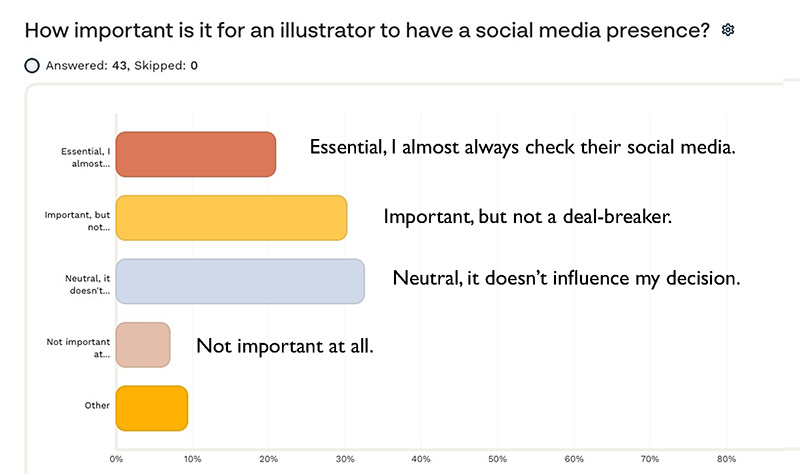
Whether or not an illustrator has a social media presence is not super-important, though several said they’re not sure how they would have found the illustrator(s) they hired without social media.
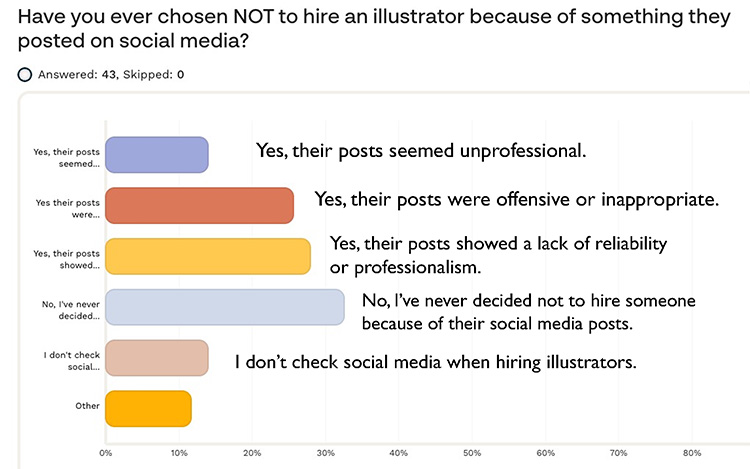
When asked if they have ever chosen NOT to hire an illustrator because of something they posted on social media, nearly 30% said yes. Reasons cited include posts that were unprofessional, inoffensive, or inappropriate. Approximately 15% said they never check social media when hiring illustrators.
Advice from agents, art reps, and those who hire illustrators:
NOTE: The majority of agents and art reps who responded to my survey asked to stay anonymous, or to only share info with those in my SCBWI workshop. Because of this, I’ve opted to keep all the advice below anonymous.
Make it easy to find your professional name and email address.
Participate in portfolio and art-sharing events on social media like #KidLitArtPostcard (on Bluesky) and #PortfolioDay.
If you have are abrasive and negative with others on social media, an agent or art rep may become more wary about taking you as a client.
Be nice. Be respectful. Even if someone says no now, it doesn’t meant they’ll always say no. Leave doors open when you can.
Put your handle on all the pieces of art you put on social media.
Boost each others’ work.
Make sure your portfolio reflects the type of work you actually want to do.
“Make cool stuff even if it’s not a book-shaped thing. I find most things because someone posted ‘hey look at this cool thing I found.'”
Be prepared to answer questions about what your long-term publishing goals are. What kind of illustration work are you open to? Are you only interested in illustrating your own stories? Are you open to cover / chapter book / picture book illustration?
Showcasing a strong online portfolio is essential, and updating it regularly.
Visual results from the Agents and Art Reps Survey
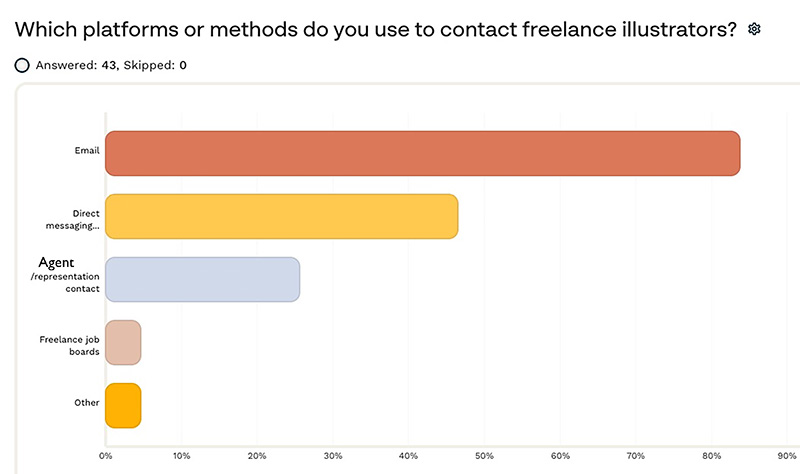
Visual Results from Hiring Illustrators: Insights From Decision-Makers