
How do I develop an illustration style? How do I gain confidence as an artist?
Welcome to my Picture Books 101 post series, in which I talk about the basics of writing and illustrating picture books for young readers. This is part of my Creating Picture Books Resource.
I began this series over on Substack, but have decided to post updated versions here on my own website. Please note that my experience is entirely with traditional trade publishing houses, not self-publishing. I’ve been creating picture books since 2010, working with publishers like Simon & Schuster, Random House, and HarperCollins. In my Picture Books 101 series, I’ll be sharing what I’ve learned about the craft and business, especially advice I would give my younger self.
Before I begin, I need to point out that…
I have no formal art training.
I’ve had several people ask me what art school I attended. My answer: I didn’t. I graduated from the University of Toronto with a Bachelor of Science, with a double major in Computer Science and Psychology. My first full-time career was working as a systems analyst at Toronto-Dominion Bank’s head office. If you’re curious, here’s my post about how I was “discovered” at an SCBWI annual conference.
Keep a creative notebook and draw regularly.
I have many different types of sketchbooks, both on paper and digital, and I draw in them constantly. Especially if you’re beginning or lacking confidence, draw just for yourself, NOT for posting publicly. I find that knowing I will post something publicly influences how and what I draw.
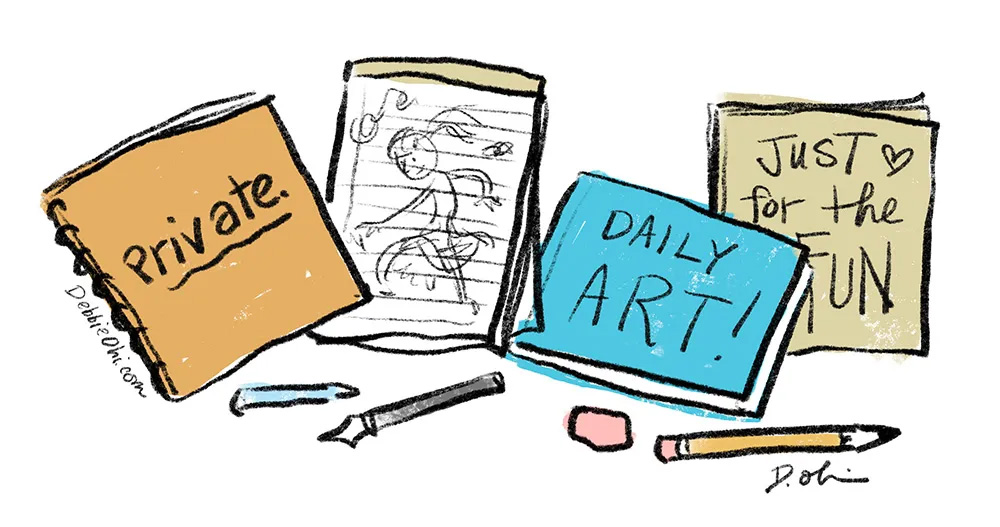
Your goal in this private sketchbook is NOT to become good at drawing but to become comfortable with the act of drawing. Draw in whatever way you can. It doesn’t have to be realistic.
Embrace your inner child, and don’t worry about making mistakes. When you’re having fun with art, there is no such thing as making a mistake. Don’t erase or aim for perfection.
Try drawing from images and memories in your head. Try drawing from reference photographs. Don’t underestimate stick figures – you can convey SO much emotion and action through a stick figure (tip: try avoiding straight lines).
Sketch from life as often as you can.
Every so often, look back through your sketches and see if there is any commonality: objects, symbols, themes, etc.
Q. How do you get “good enough at art” to illustrate children’s books?
My advice: Keep drawing and learning about drawing. Don’t just draw the same sort of thing over and over again, at least not in the same way. Try different angles, different styles, and experiment with color.
Read many, many picture books. Ensure you include books published in the past five years and by different traditional publishing houses (if you are pursuing that route). There is nothing wrong with author-publishing (aka self-publishing); there are many excellent author-published books by experienced authors and illustrators. However, there is a higher percentage of badly designed books with bad art; until you are able to tell the difference, be aware of what you feed your creative brain.
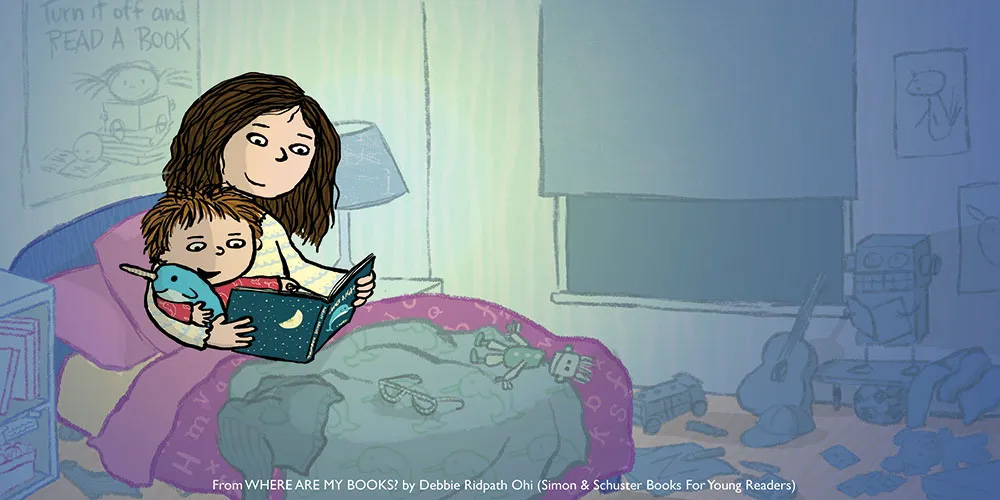
One of the (many) reasons for familiarizing yourself with what picture books are already out there is that you’ll see what kinds of characters and settings appear in children’s books. You may LOVE drawing happy children from the shoulders up and looking directly at the camera, for example, but you’ll need to expand your repertoire if you want to illustrate children’s books professionally. Ideally, you’ll be able to draw a wide variety of children in various positions with different emotions, interacting with other characters and their environment.
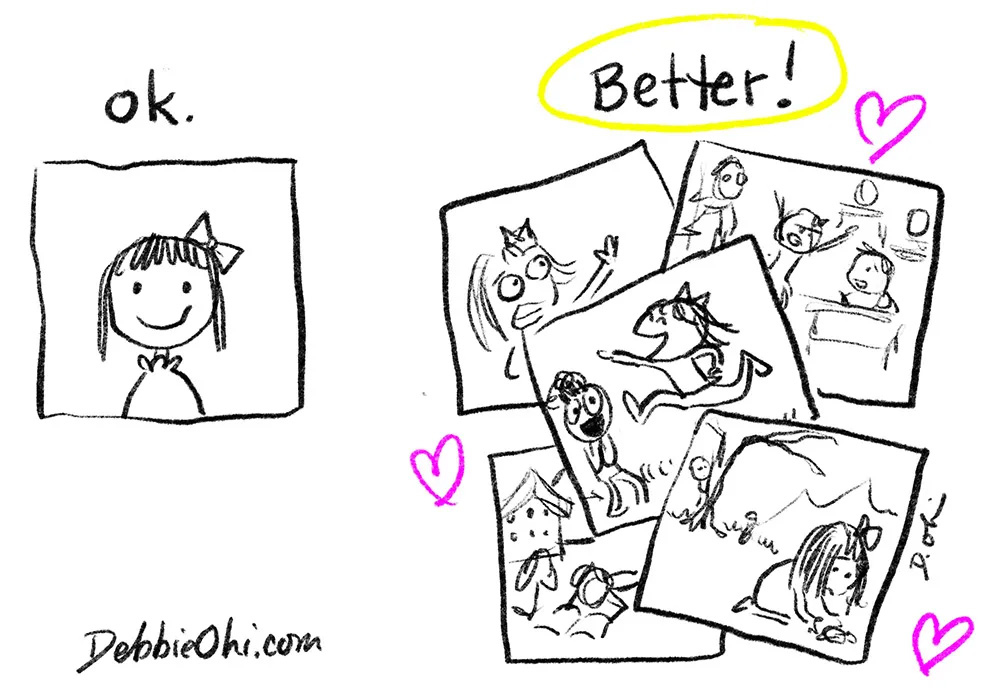
So to add to my above advice: After reading a picture book for pleasure, re-read it to ANALYZE. Examine the art. Study how art complements and enhances the text and vice versa.
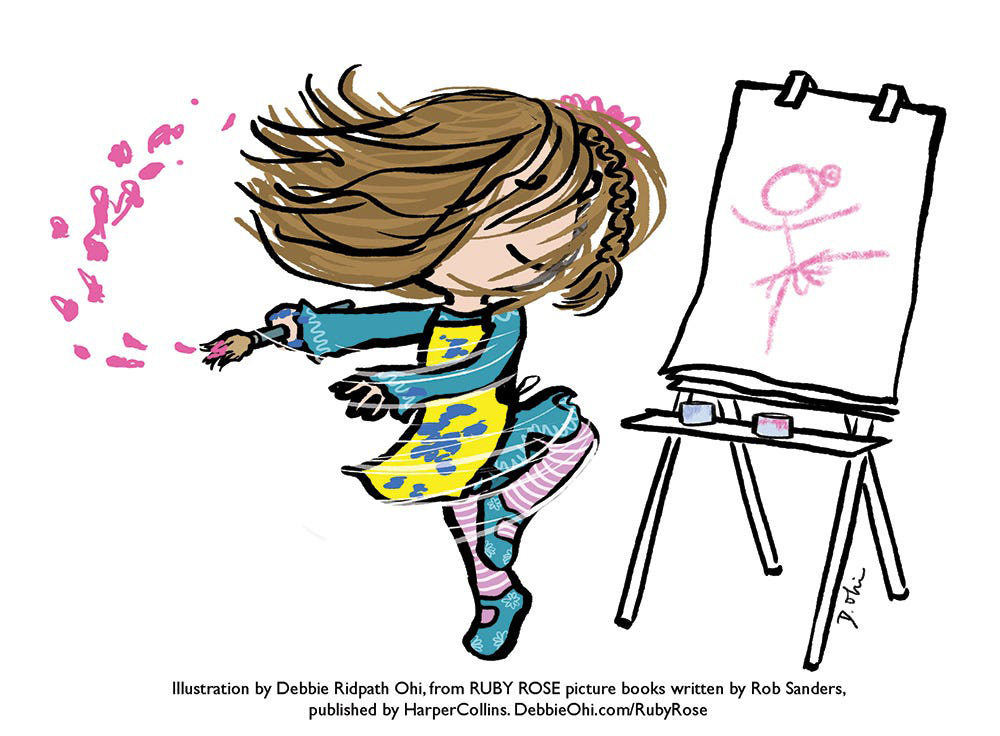
I am self-taught. I’ve always loved to draw, but I never imagined I’d ever be asked to illustrate professionally. I have always enjoyed creating comics but was never focused on technical skills early on. What I DID focus on: condensing the story narrative into a few panels and connecting with my readers.
Q. How do you develop your illustration style?
Some illustrators naturally find their illustration voice. I didn’t.
I feel like I’m still looking for mine, though I’m told I have one, that some people out there can recognize my illustration style just from my art.
However, here’s what I have learned about developing one’s illustration style for illustrating picture books, at least based on my own professional experience during the past decade:
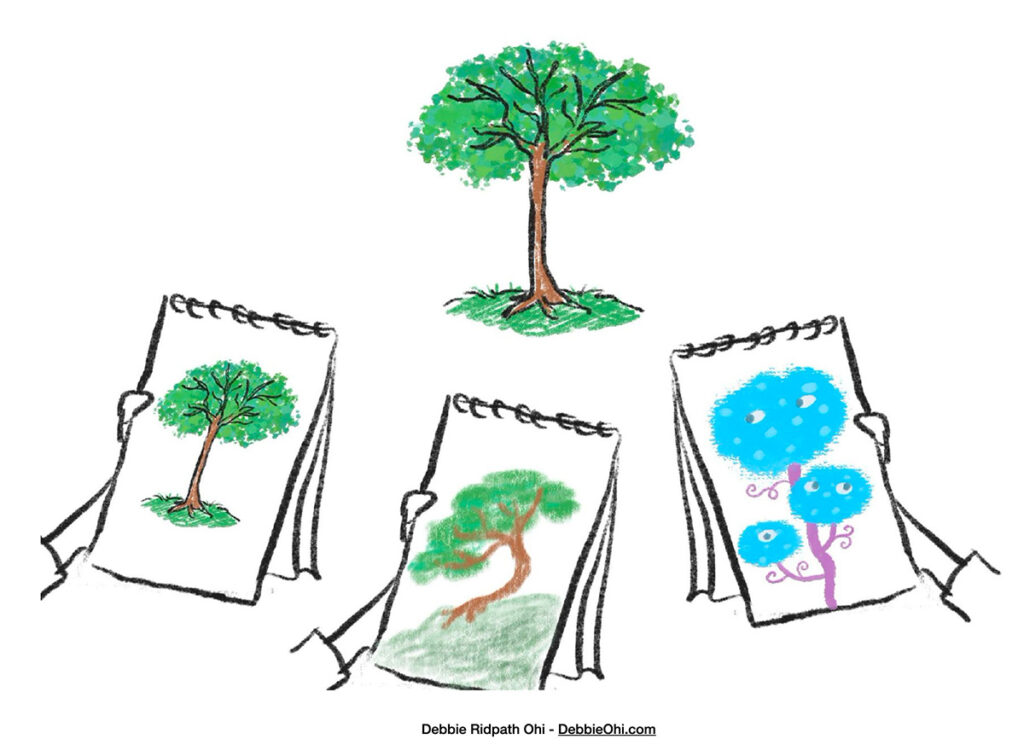
Practice drawing the same object/scene with different styles. If any styles appeal to you AND you are comfortable with the process, try drawing other objects and scenes with that style. This is also a valuable exercise for those who are used to drawing in a realistic style but want to experiment with others. Another tip for creative brainstorming: When drawing from real life or a reference photo, play around. Don’t get bogged down in details.
Choose an illustration process that is fun for you and that is easy to replicate. For example, you may have a stellar sample in your portfolio that showcases one of your illustration styles. If you can’t reproduce it throughout many picture books under a reasonable deadline, however, consider playing with that particular style in private but not presenting it as a potential style you’d use for picture book projects.
Don’t get obsessed about finding your “definitive” illustration style. If your experimental play is becoming stressful or a mechanical chore, you need to try a different approach. Don’t feel compelled to try every style, process, or media. Be wary not to let experimental play become a reason to procrastinate. Try one style at a time and see how it feels to you.
Figure out your strengths. If you’re unsure, ask someone you trust, and ideally someone familiar with you as a person AND who is familiar with the industry. Good critiquing takes time and effort, however, so I also advise against cold calling/emailing (e.g., “Hey, you don’t know me at all, but I admire your work, could you take a few minutes and take a look at my work and offer me feedback?”). Join your local SCBWI regional chapter and attend events, get to know other illustrators, and sign up for critiques from industry professionals. When you DO get critiques, be aware that so much is subjective — what appeals to one art director or agent, or editor may not appeal to another.
Find more Picture Books 101 posts and also check out my Creating Picture Books Resource.
If you are an SCBWI member, you have access to The Essential Guide; do check it out!